.avif)




.png)


How to Find a YouTube Video Creation Service for Gear Demos

.png)
Most brands typing "youtube video creation service" into a search bar are looking for the wrong thing. They want an editor to polish footage. What actually sells gear is a creator who uses it. In Google and BCG's 2025 research, 45% of video-influenced shoppers said video helped them choose which product to buy. For gear, the demo is the moment of proof.
This guide will help brands find and vet a video production service that can turn your gear into demo content worth watching.

TLDR;
- A gear demo needs a creator who genuinely uses the gear, not just a video editor.
- Editing service, UGC creator, or influencer: pick the model by what the video must do.
- Vet for authentic use and audience fit, not follower count.
- Match the creator to the discipline, terrain, and platform your buyer already trusts.
- Treat the demo as a measurable program, not a one-off post.
1. What a YouTube Video Creation Service Really Means for Gear Demos
The search term "youtube video creation service" pulls two very different offers, and confusing them costs you.
- Production and editing services take footage you already have and make it look sharp.
- Creators film authentic demos from the field, showing the gear in real use.
For a gear demo, the second one matters more. The value of a demo is proof of use, not production gloss. A buyer choosing between two packs wants to see someone load it, hike with it, and call out where it wins.
Think of the gear demo as a selection-stage format. It shows up late in the buying decision, when someone is close to purchase and needs confidence. Google and BCG's 2025 study found video working at exactly that stage, helping shoppers choose which product to buy. Directional support comes from Wyzowl's 2026 survey, where 85% of respondents said a video had convinced them to buy a product. It's a small sample of 266, so treat it as a signal, not a national number.
So before you hire anyone, get specific. Do you need footage cleaned up, or do you need someone credible to create the proof in the first place?
2. Editing Service vs UGC Creator vs Influencer for Gear Demos
Instead of defaulting to an editor, decide what the video must do first. Three models cover most gear demos, and each buys something different.
Editing or production service
- Best when you already have footage or an in-house spokesperson.
- Buys polish and speed, not authenticity or reach.
- Use it to turn raw field clips into a tight product-page cut.
UGC creator
- Films authentic demos you publish on your own channels and ads.
- Cost-efficient and fast, with usage rights you control.
- Best when you need credible proof-of-use footage at volume.
Influencer or creator partnership
- Films and publishes to their own audience.
- Buys reach and borrowed trust with a community that already listens.
- Best when discovery and third-party credibility are the goal.
Use three quick cues to decide:
- Already own usable footage? You need an editor.
- Need proof-of-use clips for your own channels? Hire a UGC creator.
- Need a trusted voice publishing to their own audience? Book an influencer partnership.
The model shapes your budget. A 2025 report, drawn from 40,000 advertisers, put the average UGC deliverable near $198. Creator-posted YouTube videos ran closer to $675, and usage rights added roughly 40%.
Authenticity should drive the choice, not just price. 2025 influencer research found genuine reviews are the top content type driving influencer-led purchases, cited by 64% of buyers, ahead of discount codes. A polished ad that no real user stands behind rarely clears that bar.
3. Where to Find Video Creators for Gear Demos
Photo by Leo Visions on Unsplash
Where you look decides what you get.
- Freelance marketplaces: broad supply, low vetting, lots of manual filtering.
- Generic creator search tools: rich metrics, but no read on real gear expertise.
- Organic YouTube and social search: authentic finds, but slow and manual.
- Purpose-built creator platforms: curated pools filtered for your niche.
Instead of scrolling follower counts, filter by what the creator actually does. A skier with 8,000 engaged subscribers who reviews touring bindings will out-demo a general lifestyle creator with ten times the reach.
YouTube is worth anchoring on for gear. Google and BCG's 2025 study found YouTube 1.6 times more likely to influence a purchase than TikTok, Instagram, or Facebook. A separate Google and Ipsos 2024 to 2025 holiday study found viewers 98% more likely to trust creator recommendations there than on other platforms, a relative lift rather than an absolute score.
This is where a niche network beats a generic tool. Popfly for Brands gives you a curated, vetted network of adventure creators plus advanced social search filters by discipline, platform, and content type. Instead of guessing from a follower count, you search for the exact rider, climber, or paddler who fits your category.
A generic marketplace makes you sort thousands of unrelated profiles. A niche pool starts you with people who already live in your space, which cuts vetting time and lowers the odds of a mismatch.
4. How to Vet a Creator for a Gear Demo
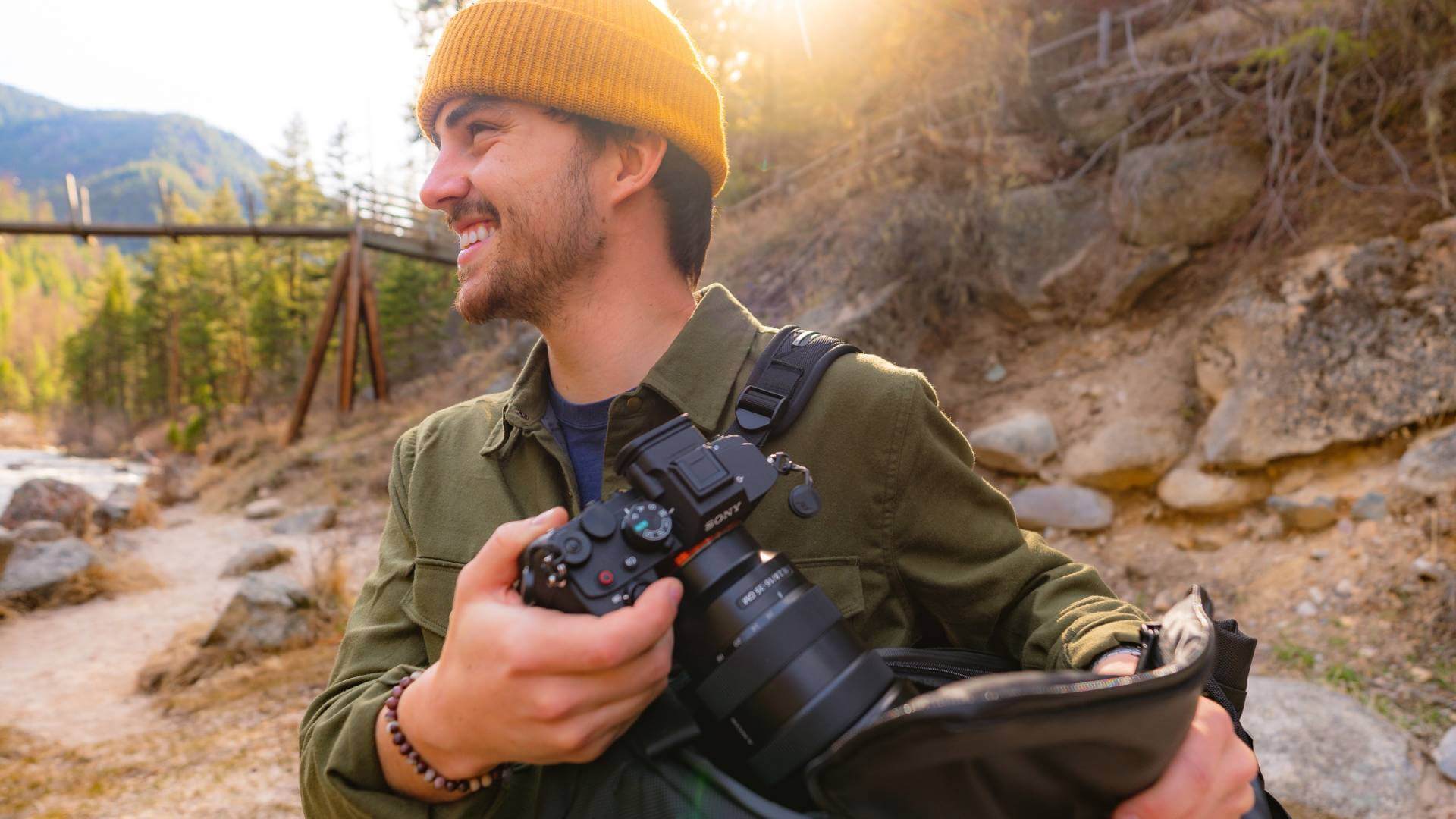
Photo by Oleg Brovchenko on Unspl
Once you have candidates, vet for credibility, not clout. Work through four signals.
- Proof of genuine use: Do they actually ride, climb, paddle, or shoot your category on their own time?
- Discipline and terrain match: XC versus enduro, sport versus trad, whitewater versus flatwater. The details read as real to buyers.
- Audience fit and engagement: A tight, active audience beats raw reach.
- Demo craft: Clear audio, tight narration, and honest calls on where the gear wins and where it doesn't.
On engagement, specify the platform before you compare anything. 2025 influencer benchmarks show Instagram nano-influencers under 10,000 followers averaging about 1.7% engagement. Macro accounts in the 500,000 to 1 million range averaged around 0.6%. Smaller and matched often converts better than big and broad.
Instead of shortlisting by subscriber count, shortlist by fit. A creator who genuinely lives in your category will demo it with details a hired presenter can't fake. That authenticity is what a buyer at the selection stage is scanning for.
This is the vetting Popfly is built around. Creator-First filtering by discipline helps you surface people who actually use the gear before you ever send a brief.
5. Turn a Gear Demo Into a Measurable Program
A single demo is a nice asset. A repeatable, tracked motion is a growth channel. Instead of treating the video as a one-off post, run it as a program.
- Brief clearly: Spell out deliverables, usage rights, and exactly what to demonstrate.
- Repurpose everywhere: Product pages, paid ads, email, and creator storefronts.
- Track outcomes, not views: Tie the demo to clicks, conversions, and revenue.
- Build for the long term: Move your best creators into affiliate and ambassador roles for evergreen gear content.
A clear brief does most of the work here. Name the exact features to demonstrate, the setting, the required shots, and how you'll reuse the footage. That upfront detail is the difference between a clip you post once and an asset you run for a year.
Measurement is where most creator programs fall apart, and it's the gap this guide keeps circling back to. One widely cited 2025 industry analysis put average returns near $5.78 for every $1 spent on influencer marketing. Read that as an industry-wide earned media value, not guaranteed direct sales, and hold your own program to your own numbers.
This is the chaos Popfly was built to end. Popfly for Brands centralizes your creators, assets, and communication in one hub, then tracks content and ROI in performance dashboards. Popfly Storefronts turn a demo into a standing sales channel, so a "what's in my kit" video keeps selling long after it posts.
What This Means
You don't need a slicker video. You need the right creator making the right proof, then a system to measure it.
- Define the job first: Decide whether the video needs polish, authentic proof, or reach before you hire.
- Source from a vetted, filtered pool: Match the creator to the discipline and platform, not the follower count.
- Vet for real use: Prioritize genuine expertise, audience fit, and honest demo craft.
- Run it as a program: Brief tightly, repurpose widely, and track revenue, not views.
Popfly for Brands brings discovery, vetting, collaboration, and ROI tracking for adventure creators into one hub. It was built to end the sourcing chaos, so your team spends less time managing spreadsheets and more time creating gear demos.