.avif)




.png)


Influencer Marketing Budget Guide for Outdoor, Travel & Adventure Brands in 2026


Imagine your latest ultralight backpack product is featured in a breathtaking TikTok video, shared by a trusted mountaineering creator summiting a snowcapped mountain. And then, ahhhh the big moment, when a drone unveils their flawless dance down untouched slopes. Your brand’s story is now carved in powder. With the right creator and a smart budget, this could be your brand.
There has never been a better or more business critical time to invest in creators. Outdoor, travel, and adventure consumers are making buying decisions faster and earlier in the journey, and they’re doing it through creators they trust. Traditional ads are getting ignored. Social feeds are getting noisier. But creator content? It still cuts through, because it's real recommendations from real people.
People want to see gear in the wild, on real people, in real conditions. They want to watch someone test your jacket in a sleet storm, haul your pack up a ridge, or toss your duffel into the back of a dusty rental Jeep. And when the person behind the camera actually lives the lifestyle, their content doesn’t just entertain it inspires, it sells, and it builds community.
That’s why setting your creator budget now is the first step toward building a program that actually performs. This guide breaks down how outdoor, travel, and adventure brands can budget for influencer campaigns that feel authentic, spark engagement, and deliver measurable impact without wasting a dollar.
Why Influencer Marketing Works for Adventure Brands
Outdoor consumers don’t want ads. They want proof.
They want to see your jacket in a sleet storm, your pack on a thru‑hike, your duffel stuffed under a hostel bunk before a sunrise city tour. Creators deliver that because they’re already out there traveling, climbing, skiing, road‑tripping, camping, and documenting the whole thing.
Their content feels like a recommendation from a friend who actually knows what they’re talking about. And with short‑form video, shoppable posts, and better analytics, it’s easier than ever to reach niche communities like ultralight backpackers, van‑lifers, overlanders, or eco‑minded travelers.
Step 1: Set Goals
Before diving into budgeting for your 2026 influencer marketing campaign, it’s crucial to define what success looks like, keeping the latest advertising trends in mind. Your goals will guide every decision, from selecting the right influencers to choosing platforms and allocating funds. Start by answering key questions that shape a modern, results-driven strategy.
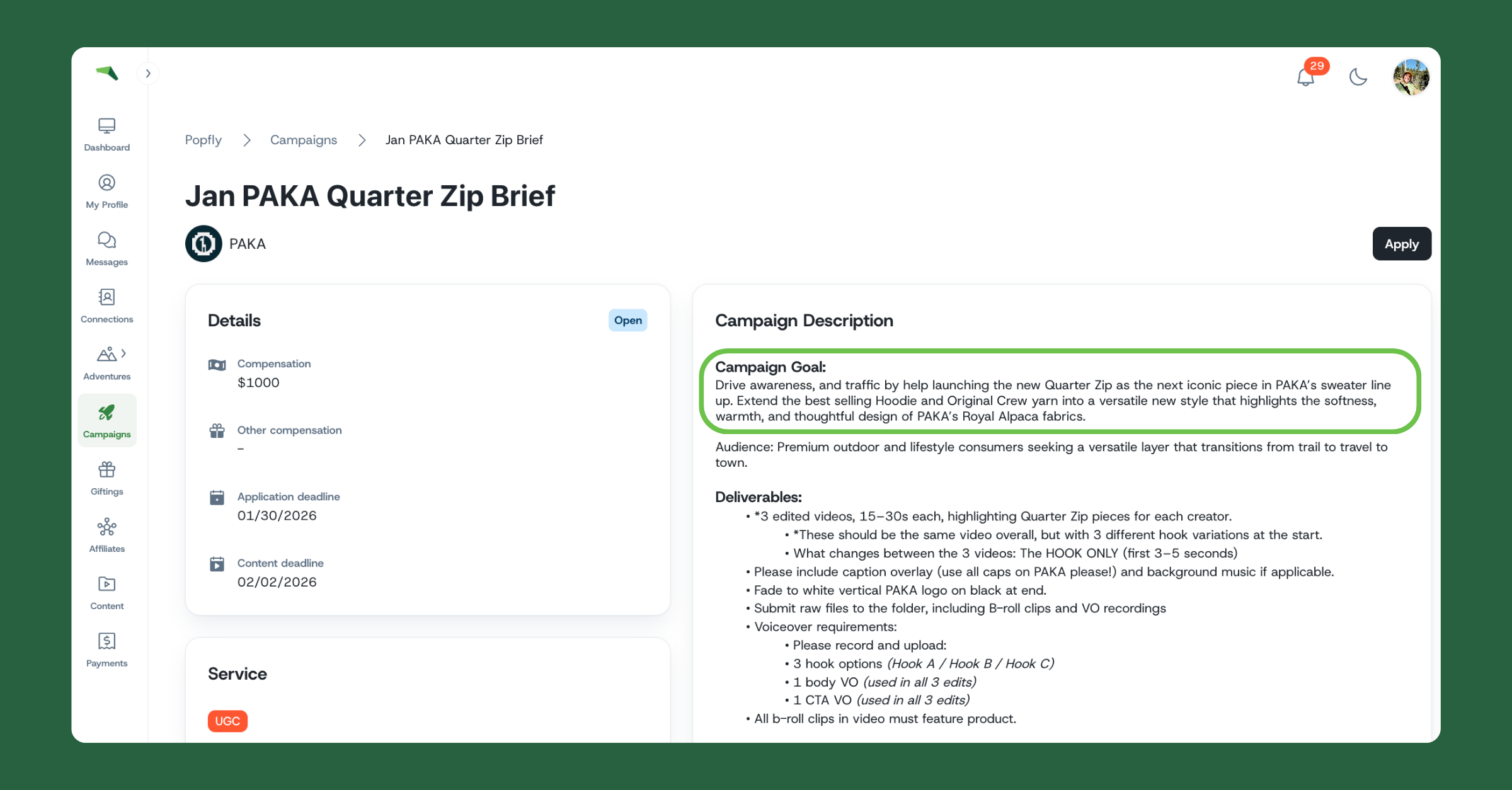
What is the desired audience action? For example, are you aiming to drive purchases through shoppable TikTok Reels, boost app downloads for a new gear-tracking tool, or grow engagement?
Next, consider who is your core audience? Are you targeting Gen Z skiers on TikTok, millennial hikers on Instagram, or eco-conscious travelers across multiple platforms?
Then, how will you track success? Decide if you’ll measure conversions (e.g., sales from shoppable posts), engagement (likes, shares, etc.), click-throughs to your website, or mentions of your brand across socials. Another critical question is what’s the campaign timeline?
Finally, does the campaign sync with other marketing efforts? For instance, can it tie into immersive AR try-ons, a gear demo, or an omnichannel holiday push?
Pro Tip: Set SMART goals to set your brand up for success and better forecast outcomes.
Step 2: Navigate Influencer Rates
When considering your budget for influencer campaigns in 2026, remember that when you hire a creator, you're not just paying for an ad placement. You’re tapping into a full-service creative engine and an engaged audience.
Key Pricing Factors
Influencer pricing in 2026 hinges on several dynamic factors that outdoor, travel, and adventure brands must understand to budget effectively. The platform chosen significantly impacts costs, with TikTok and Instagram Reels commanding premium rates due to their high view counts, while YouTube might be ideal for in-depth gear reviews. Shoppable video features often justify higher costs for brands seeking instant conversions.
Engagement rate is another critical driver, with influencers boasting 2–5% engagement often outperforming those with larger but less active audiences. Brands can use Popfly to pinpoint creators with optimal engagement for better ROI.
The type of deliverable also shapes pricing, as in-depth product reviews or live-streamed demos require more effort than static images. For instance, an AR try-on showcasing a backpack’s features can elevate costs but captivate tech-savvy audiences.
Usage rights further influence fees, especially when brands repurpose content for ads, websites, or immersive showrooms. Securing rights for cross-channel use in omnichannel campaigns ensures long-term value but may more than double fees.
Influencer Pricing Tiers

Step 3: Craft a Budget
A modern budget accounts for interactive formats and cross-platform amplification.
Sample breakdown for a $20,000 campaign:
- 65% Creator Fees ($13,000): Covering content creation and posting
- 5% Product Costs ($1,000): Gear for testing and shooting with
- 10% Paid Amplification ($2,000): Boosting posts or whitelisting content via TikTok, Instagram, etc.
- 20% Tech & Management ($4,000): Content platform subscription fees, agency fees, etc.
Budget Examples by Size
- Small: 5 nano influencers + ad boost = $5,000–$10,000.
- Medium: 3 micro + 2 mid-tier = $15,000–$35,000.
- Large: Macro, mid-tier, nano mix = $50,000–$150,000.
Tip: Use UGC and influencer platforms like Popfly to optimize influencer selection and help you manage your campaign and budget from start to finish.
Step 4: Factor in Hidden Costs
In 2026, outdoor, travel, and adventure brands must budget for hidden influencer marketing costs. Logistics, like shipping kayaks or international delivery, can add up fast for bulky gear. Fees for whitelisting or shoppable ads boost reach but can be costly when negotiated post-deal.
One of the biggest money‑savers? Negotiating usage rights and whitelisting upfront. When brands wait until after content is delivered to request paid usage, extended licensing, or creator whitelisting, the price almost always jumps. Creators plan their workload, deliverables, and compensation around the original scope so adding rights later means renegotiation, higher fees, and sometimes even delays.
By locking in usage terms early (whether you want to run their Reel as an ad, repurpose it on your website, or use it in a retail display) you avoid surprise costs later and build a smoother working relationship. Creators appreciate clarity, and brands benefit from predictable costs and cleaner workflows.
Transparency with influencers about budgets builds trust, ensuring authentic content and lasting partnerships.
Step 5: Focus on Long-Term Impact
Ongoing relationships trump one-offs in 2026.
Prioritize:
- Ambassadors and long-term relationships: Some of the best returns come from brand ambassadors who genuinely align with your mission and deliver stronger engagement over time. Try 6–12 month partnerships to develop trust and evergreen content.
- Cross-Platform Content: If you’re already sending a creator into the mountains, on a road trip, or across the globe, maximize that moment. Negotiate for multiple deliverables from a single shoot — Reels, stills, Stories, UGC variations, and behind‑the‑scenes clips.
- Lean into UGC creators for volume: UGC creators (who don’t need large followings) can produce high‑quality content at a fraction of the cost of influencer posts. They’re perfect for product demos, how‑tos, and evergreen content libraries.
- Use creators who are already traveling: Instead of funding a full trip, partner with creators who already have travel plans that align with your brand. If they’re heading to Patagonia, Iceland, or Moab anyway, your gear becomes part of the story without the added travel budget. You can find a list of current creator trips in the Adventures tab in Popfly.
- Avoid peak‑season pricing: Creators raise rates during high‑demand windows like Black Friday and Holiday. Read more: Maximize Your Black Friday Sales: The Ultimate Creator-Led Playbook for Outdoor, Adventure and Travel Brands
Budget Mistakes We See All the Time
Even the most seasoned outdoor and travel brands run into the same budgeting pitfalls. Avoiding these can save thousands and dramatically improve campaign performance.
Underestimating usage rights
Brands often budget for the creator’s post but forget the cost of actually using that content across ads, email, retail, or their website. Usage rights negotiated upfront are typically less expensive than renegotiating after the content goes live.
Overspending on macro creators too early
Bigger isn’t always better. Outdoor and travel audiences respond incredibly well to nano and micro creators who feel more relatable and trustworthy. Many brands burn budget on one macro post when a mix of smaller creators would drive more conversions.
Forgetting to budget for amplification
A great piece of content deserves a push. Paid amplification (boosting, whitelisting, spark ads) is often where the real ROI happens — but only if you plan for it. Brands that skip this step leave reach and revenue on the table.
Not negotiating multi‑deliverable bundles
If a creator is already traveling, shooting, or adventuring with your gear, maximize that moment. Bundling Reels, stills, Stories, UGC variations, and raw footage is far more cost‑effective than buying each piece separately.
Ignoring logistics costs
Shipping tents, duffels, skis, or luggage across the country or internationally adds up fast. Brands often forget to budget for this, especially in the travel category.
Skipping long‑term partnerships
One‑off posts rarely move the needle. Multi‑month relationships not only cost less per deliverable but also produce more authentic, higher‑performing content.
Budget Smarter with Influencer Campaigns
When you budget with intention and partner with creators who actually live the lifestyle your campaigns deliver real value: stronger sales, deeper community, and content that lasts.
Ready to elevate your strategy? Popfly specializes in data-driven influencer and UGC management solutions tailored to adventure brands. Popfly makes it easy to find the right creators, manage your budget, and scale a program that feels authentic on both sides. Reach out when you’re ready to build something meaningful.