.avif)




.png)


Influencer Marketing Agency vs Platform: Which is Better for Your Brand

.png)
Creator marketing isn't the side project it used to be. US creator ad spend hit roughly $37 billion in 2025, up 26% year over year, and it's growing nearly four times faster than media spend overall. That's real budget now, which means the way you buy this stuff carries real risk if you get it wrong.
Most brands frame the decision as agency versus platform, when many brands have both to work in unison.
Key takeaways
- An agency is a service. A platform is a tool. The real question is how much you want to hand off versus own.
- Agencies cost more and hand you less control, but the work gets done. Platforms cost less and hand you control, but you're the one doing the work.
- Platform pricing runs from under $100 a month to $2,500-plus at the enterprise tier. Agencies typically run 10-30% of managed spend, or a flat retainer in the low four to five figures.
- Nobody talks about creator fit, and it's the variable that actually matters. A generic roster or database hands you creators who've never heard of your category.
- For a niche brand, a purpose-built platform with a vetted community usually beats a generic version of either option.
1. The real difference between an agency and a platform
An agency is a service. You hire people to run creator marketing for you: strategy, sourcing, negotiating, creative direction, compliance, reporting. The work happens outside your team.
A platform is a tool. It gives your team the software to run the program yourselves: discovery, outreach, contracts, content collection, payouts, and tracking, all in one place. You're the one operating it.
One more distinction before you compare anything: "platform" isn't one category. A generic self-serve database hands you a few million profiles and leaves the vetting entirely to you. A purpose-built platform is built around a specific kind of brand with a vetted community already inside it, so you start from fit instead of starting from zero. Those are two very different products wearing the same label, and it changes everything below.
2. How an agency works: pros and cons
An agency sells you capacity and expertise you don't have in-house. What you typically get:
- Strategy and campaign planning built around your goals
- Existing relationships with creators they already trust
- Full production, brief to finished content
- Paid amplification to extend reach
- FTC compliance workflows and disclosure templates
- Managed reporting, so you're not building your own dashboard
The upside is real. Minimal lift on your end, senior expertise, and speed even if you've got no bench at all. If execution is the actual bottleneck, an agency removes it fast.
The downside is just as real. Agencies cost the most of any option here. You give up direct control over decisions and timelines. There's an authenticity gap once a middle layer sits between your brand and the creator, and a lot of agency rosters are generalist, so the creators may not know your category any better than a database would.
One thing worth being blunt about: the FTC holds your brand accountable for disclosure, not the agency. Every piece of sponsored content needs a clear, conspicuous disclosure, and the FTC has flagged that a platform's built-in disclosure tool might not cut it on its own. Handing off the work does not hand off the liability.
3. How a platform works: pros and cons
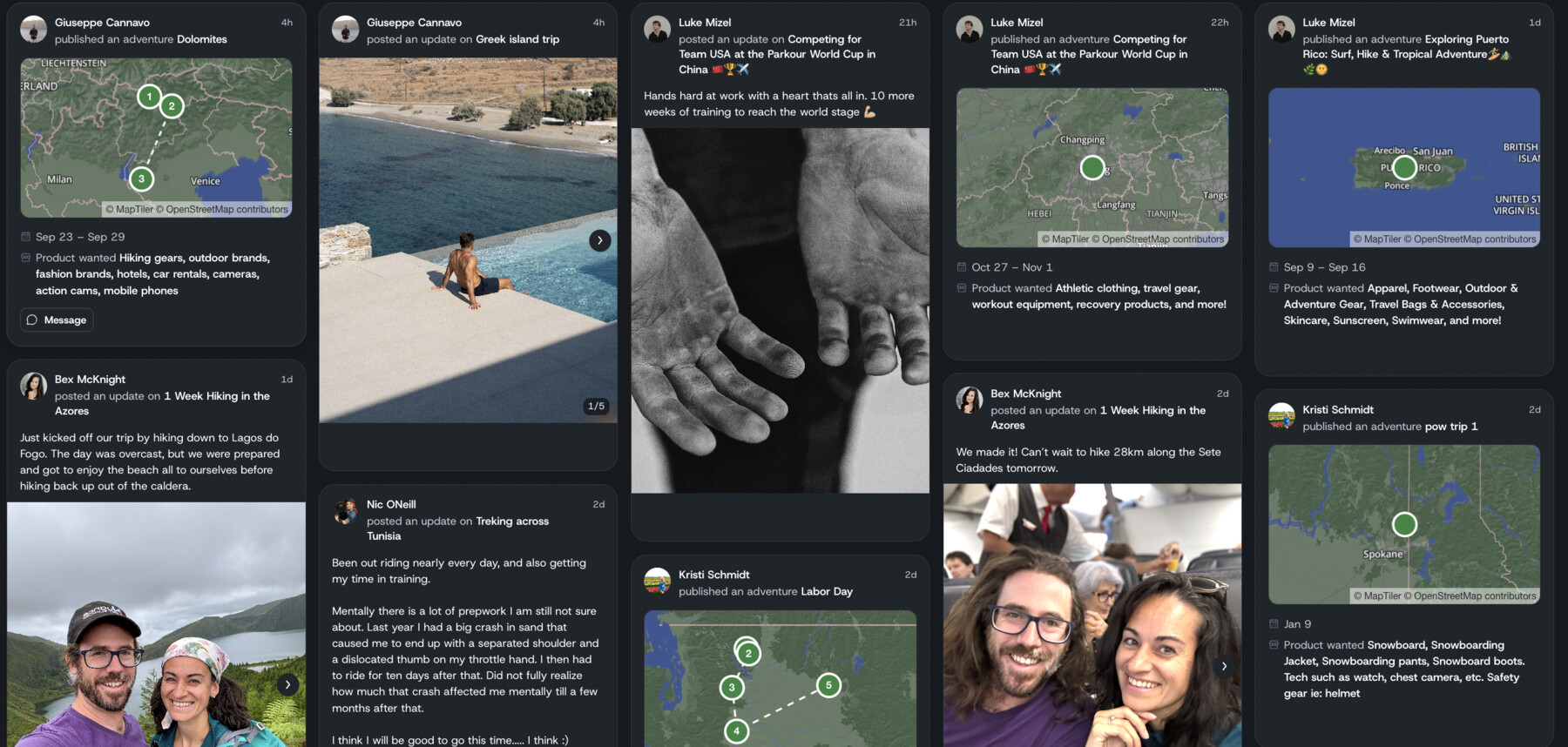
A platform sells you control and efficiency. You keep the program in-house and run it with software. What you typically get:
- Discovery through search and filters
- Outreach and communication in one thread
- Campaign management and briefs
- Content collection and approvals
- Creator payouts
- Dashboards for content and ROI
This favors teams that want to own the program. Platforms cost far less than agencies, you keep full control of creative and strategy, everyday work moves fast, and you own your data instead of renting it.
The honest catch: you're supplying the labor and the judgment. On a generic database, that means heavy vetting, because nothing filters for quality or fit on your behalf. Fraud is a live problem here too. Fake or bot followers are the single most common quality complaint in this industry, and only about one in ten practitioners say they've had no quality issues at all.
Skip the generic database and you skip that problem. A vetted pool that already fits your brand is the actual difference between a generic platform and a purpose-built one, and it's the single biggest downside of going self-serve, gone.
4. The cost reality: what agencies and platforms charge
Platform pricing is directional, not fixed. Self-serve tools can start under $100 a month. Mid-market lands around $168 a month. Enterprise platforms run $2,500 to $5,000-plus a month.
Agency pricing has no single audited benchmark, so every number here is directional. Fees commonly cluster around 10-30% of managed spend. Some charge flat retainers in the low four to five figures, often blended with a markup on creator fees. Your actual quote depends on agency size, scope, and contract length.
Here's the line item nobody puts in the pitch deck: a platform is only cheaper if your team actually has the time and the skill to do the work it leaves on your plate. Add up the hours spent on discovery, vetting, outreach, and reporting. If those hours are scarce, the "cheaper" option can end up costing more than it looks like on paper.
Do the returns justify it either way? Most marketers expect a return within a month, and the vast majority expect their budgets in this category to grow. The returns are real. They reward good execution, not whichever model you picked.
5. The question to answer: reach vs. fit
Fit and authenticity are what perform. Creator-generated content consistently outperforms brand-directed content on reach, engagement, and conversion, by a wide margin, according to marketers running the campaigns themselves.
Trust follows the same pattern. People are more likely to remember a creator's recommendation than a traditional ad, and among Gen Z specifically, they're meaningfully more likely to buy something a creator recommended than something an ad served them. Size isn't the advantage here. Reach is, and it doesn't scale linearly with follower count, smaller creators often post the highest engagement of anyone.
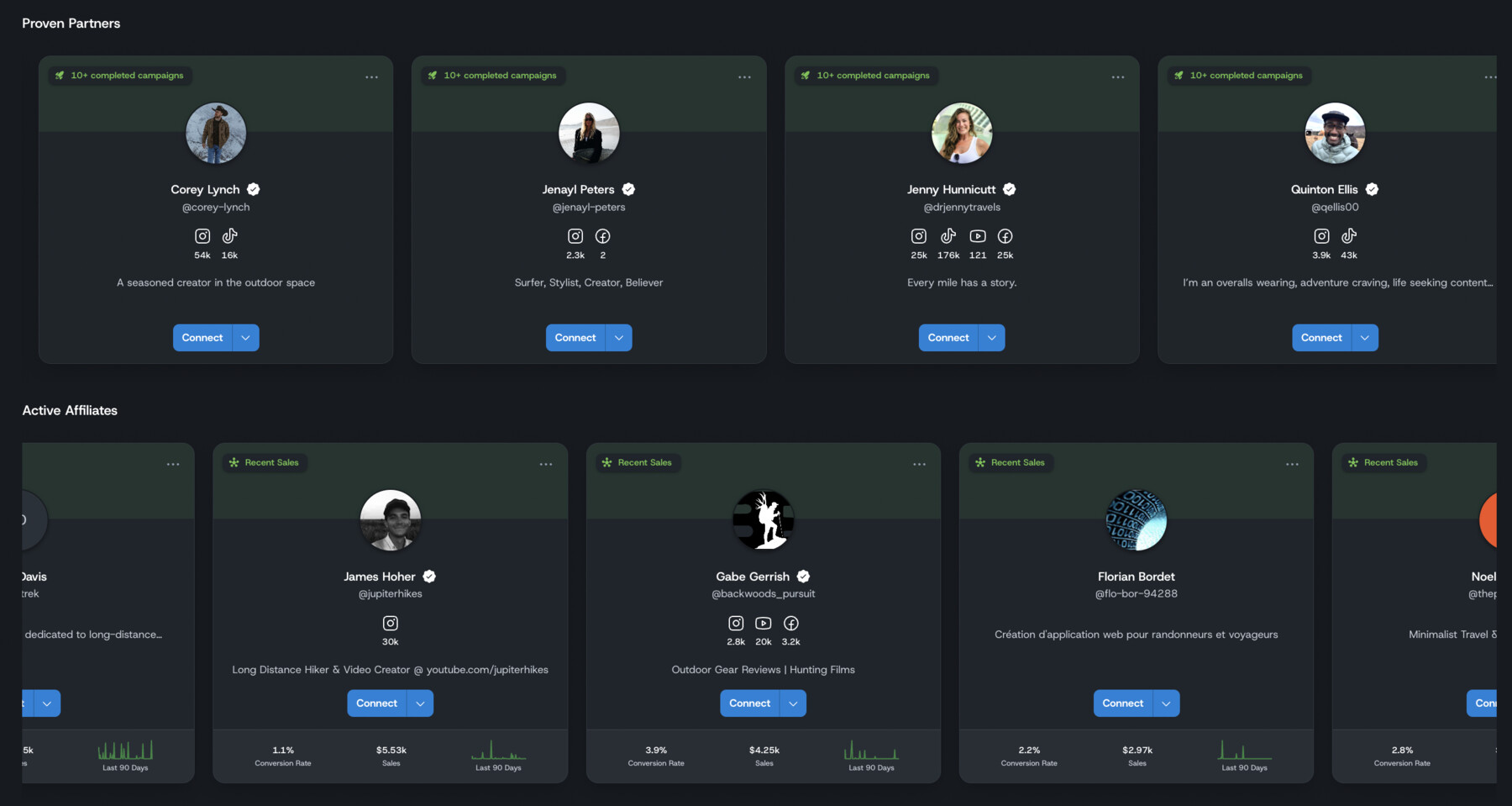
There's no outdoor-specific benchmark for any of this yet, so don't read these as niche numbers. But the logic holds harder outdoors than almost anywhere else, because these customers research before they buy and they buy on lived expertise. A generalist agency roster or a generic database will hand you creators who've never actually been on the trail. That's the exact gap a specialist model closes.
6. When to choose an agency, a platform, or both
Choose an agency when execution is the bottleneck, and not budget. No in-house bench, a complex multi-channel launch, heavy paid amplification that needs specialists. You're buying capacity and speed.
Choose a purpose-built platform specifically when fit in your niche matters most, because vetting is exactly where generic tools cost you.
A lot of brands end up running both: a platform for the day-to-day program, an agency layered on to work together in unison.
Run the three-check test before you decide:
- Time — do you actually have the hours to run this yourself?
- Budget — what can you spend, and is it going to work or to tools?
- Complexity — is this everyday creator marketing, or a heavy one-off production?
Tight on time and high on complexity, lean agency. Have the judgment and want the control, lean platform. Your customers only trust category-native creators, lean specialist. Once you've picked, decide your content motion too: UGC or sponsored content.
With Popfly, you skip the generic-database vetting entirely and start with people who already know your customer. Discovery, campaigns, payouts, and ROI in one place, not a stack of spreadsheets.