.avif)




.png)


Creator Marketing Hot Takes: What’s Broken, Overrated, and What's Actually Working
.jpg)
Half of what you’ve been told about creator marketing is wrong.
That’s not meant to be provocative for the sake of it. It’s a reality we see every day talking to brands, agencies, and creators who are all trying to make sense of a rapidly changing landscape. Creator marketing has never been more powerful… or more misunderstood.
At Creator Economy Live, the Popfly team took the stage to challenge some of the most common assumptions holding the industry back. These hot takes are grounded in real data, real programs, and years of firsthand experience.
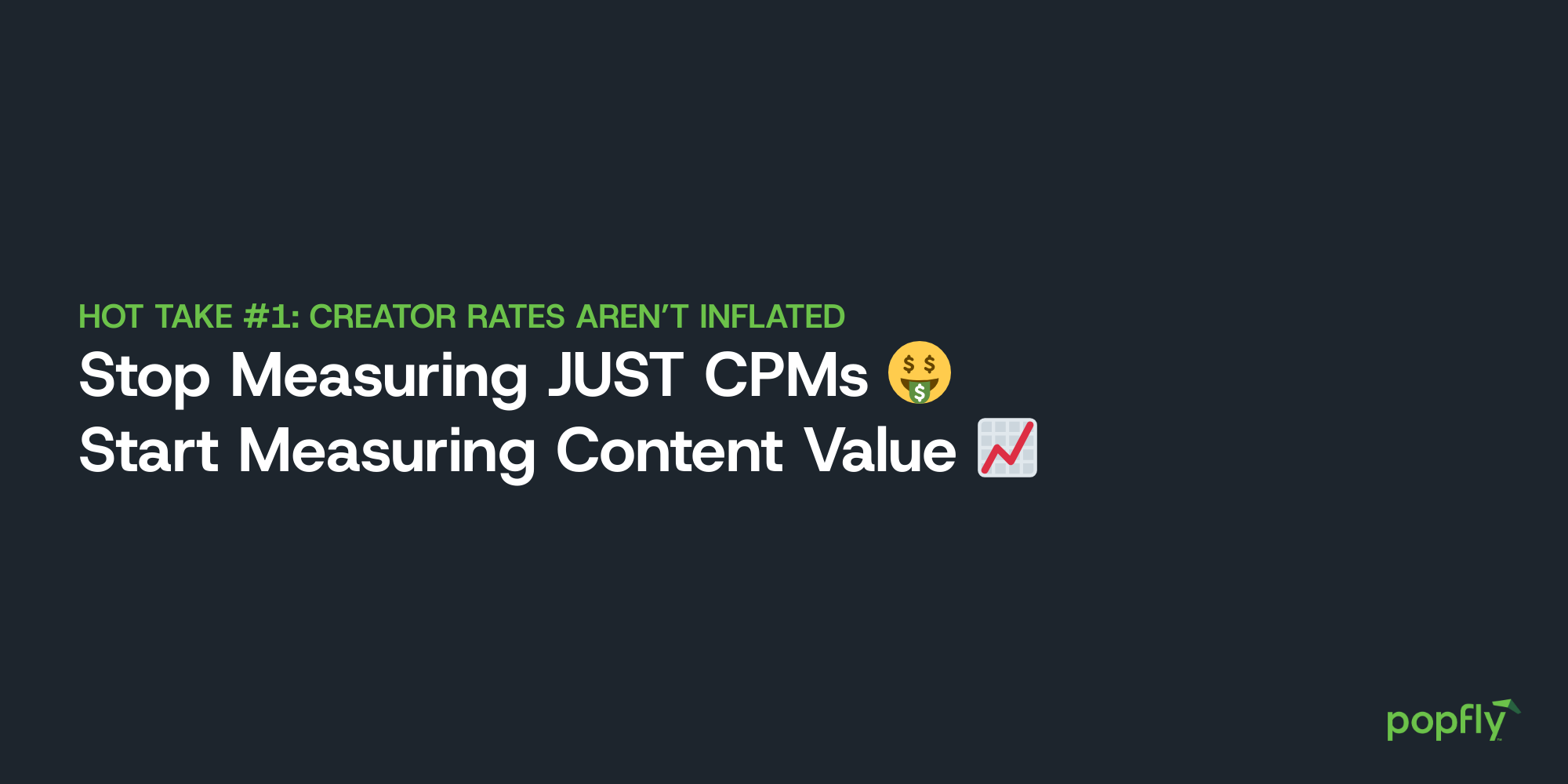
Hot Take #1: Creator Rates Aren’t Inflated
Scroll LinkedIn long enough and you’ll see it: complaints about creator rates being “out of control.” The implication is that creators are charging too much for a single post.
That perception comes from a fundamental misunderstanding of what creators actually deliver.
When you partner with a creator, you’re not just paying for a piece of content. You’re paying for:
- Concept development and storytelling
- On-camera talent and production
- Location scouting, styling, hair and makeup
- Editing, revisions, and optimization
- And distribution to an audience that actually cares
If an agency delivered all of that and then ran the spot across their own owned media, the price tag wouldn’t raise eyebrows. But when a creator does it, we suddenly reduce the value to CPMs.
That’s the wrong framework.
Creator content should be evaluated on content value as well, not media math alone. The creative, the community, and the credibility are bundled together and that’s exactly why creators drive real brand growth.
Hot Take #2: Client Briefs Are the Real Performance Killer
When creator content underperforms, the algorithm is usually the first thing blamed.
But more often than not, the real issue is the brief.
The worst-performing briefs tend to fail in the same ways:
- They control the outcome instead of defining the goal
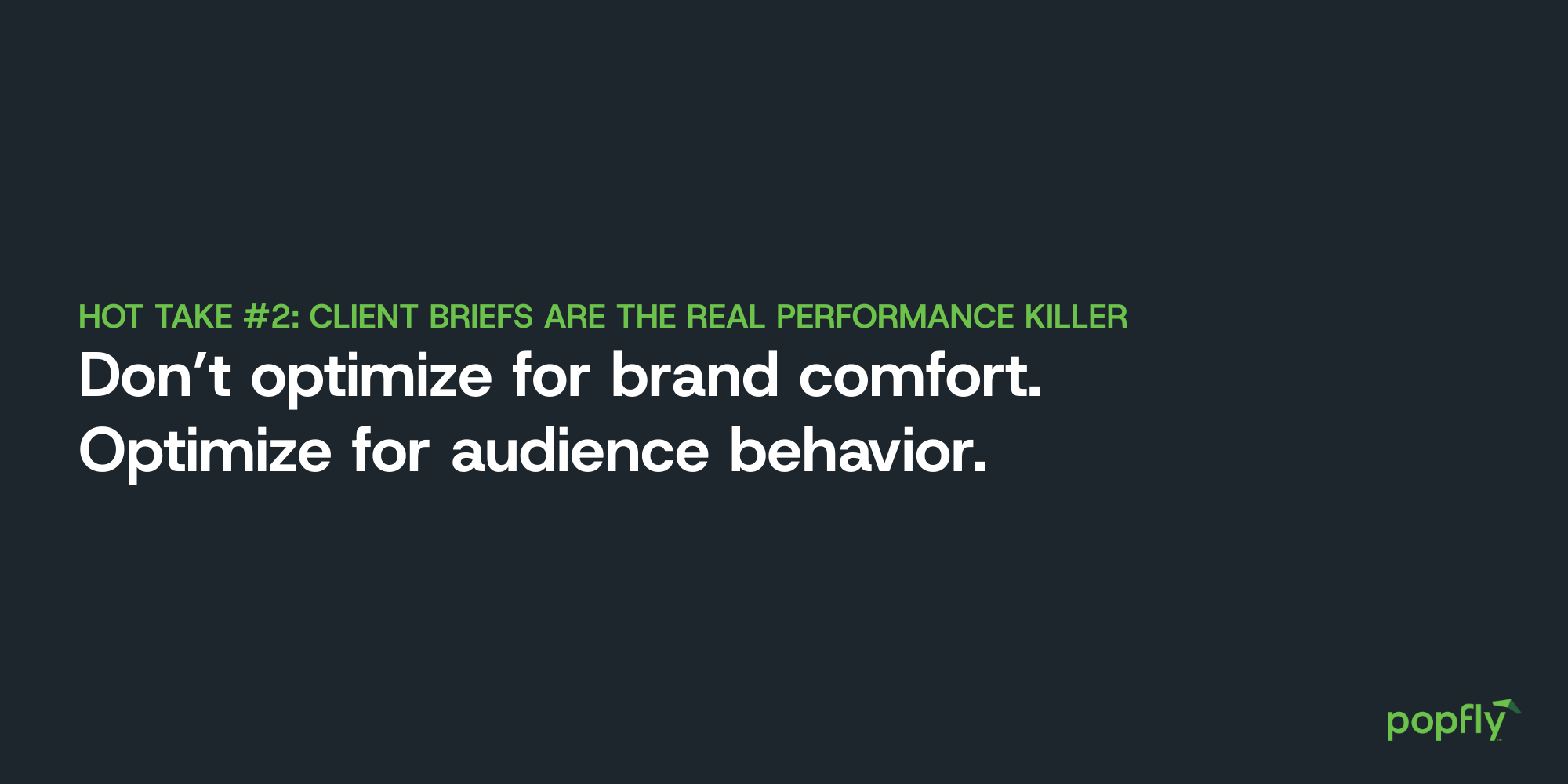
- They optimize for brand comfort, not audience behavior
- They remove the very personality that made the creator worth hiring
Brands will spend months carefully selecting the right creator, then hand them a document that turns them into a scripted spokesperson. The result is content that feels safe, polished… and completely forgettable.
High-performing creator programs are built on clarity and trust. Clear objectives. Clear guardrails. And the freedom for creators to do what they already know works with their audience.
If you don’t trust a creator to speak in their own voice, don't hire them.
Hot Take #3: Focus on Building Creator Networks, Not Campaigns
Most creator marketing is still managed at a campaign level.
Fixed timelines. One-off deliverables. Rates renegotiated every time. Creators treated like vendors.
The problem? Campaigns end. The solution? Networks get stronger.
When brands invest in creator networks (groups of aligned creators they work with repeatedly) something powerful happens. Trust compounds. Content improves. Activation becomes faster and more efficient. Creators move from one-off partners to long-term advocates.
Instead of starting from zero every launch, brands can activate the same creators across:
- Product drops
- Evergreen content
- Affiliate programs
- Paid media
- Events and local moments
This isn’t just more efficient, it creates consistency and credibility that no single campaign can replicate.
That's how ALPAKA brought in $334K+ in revenue in just 90 days, they built a creator-powered growth engine.
The compounding effect is the magic. ✨
- Trust compounds
- Content compounds
- Commerce compounds
- Community compounds
If you change one thing about your creator strategy in 2026, let it be this: stop planning campaigns. Start building networks.
Hot Take #4: The Days of Trend-Chasing Are Over
Trends feel safe. Someone else tested them. Someone else proved they work.
But when everyone shows up the same way, no one stands out.
The data backs this up. Consumer interest in trends is declining, and a growing number of audiences now say brands jumping on trends feels embarrassing.

Here’s the good news: audiences don’t follow creators for trends. They follow them for perspective.
The creators and brands who win long-term aren’t trend-chasers, they’re pattern owners. They repeat what only they can do. Their audience knows what to expect and keeps coming back for it.
For brands, the opportunity isn’t to chase the next viral format. It’s to identify what a creator already does well, fund that pattern, and let it evolve naturally over time.
Trends expire. Patterns compound.
Hot Take #5: Follower Count Is the Least Important Metric
Follower count is easy to see...and easy to misuse.
A creator with millions of followers might look impressive on paper, but attention, trust, and influence don’t scale evenly with audience size.
Better signals of impact include:
- Engagement rate
- Watch-through time
- Comments that show decision-making or intent
- Direct traffic and referral lift
A smaller, more niche creator with highly engaged followers will often outperform a larger creator with a broad, passive audience especially when trust and conversion matter.
If you’re still shortlisting talent based primarily on follower count, you’re optimizing for visibility instead of true influence.
What This Means for 2026
Creator marketing isn’t broken — but many of the ways we’ve been running it are.
The brands that win next year will be the ones willing to:
- Value creators as true creative collaborators
- Build trust instead of over-briefing
- Invest in networks, not one-offs
- Prioritize originality over trends
- Measure what actually matters
At Popfly, this is exactly what we’re building toward: helping brands move beyond campaigns and into creator ecosystems that compound over time.